

Harlem D. Henderson developed this essay through his 2024 internship with the AUC Art History + Curatorial Studies Collective and partner organizations the Andrews-Humphrey Family Foundation, and the Stuart A. Rose Manuscript, Archives, and Rare Book Library at Emory University. Henderson, then a senior at Morehouse College, conducted research in the Benny Andrews archives at Emory’s Rose Library and at the Benny Andrews Estate in Brooklyn.
AMIDST SYSTEMIC INJUSTICE
BLACK ART IS CHAMPIONED
BY HARLEM D. HENDERSON
THE champion, 1968
50 x 50 inches
Oil and collage on cavnas
Artist and activist Benny Andrews’s The Champion, 1968, depicts an African American boxer seated on the corner of a boxing ring, his crossed arms donning black boxing gloves. The Champion’s piercing gaze, from beneath a towel veil, confronts his odds and the viewer. Leaned forth in exhaustion, the boxer asserts an aura of determination and perseverance.
Benny’s unromanticized boxer details the reality of this sport; The Champion’s grotesque collage-sculptured face lifts off the canvas, with the layered material becoming the swelling tissue of a face maimed by a merciless beating. It is pulverizing to set eyes on. The physical demands boxers must overcome to assure victory bear a resemblance to the struggles of combating America’s long history of systemic racism. For Andrews, it was a theme he often addressed in his art and activism.
In the summer of 2024, I spent eight weeks researching Benny Andrews at the Benny Andrews Estate in Brooklyn and the Benny Andrews Papers at Emory University’s Rose Library. In the archives, I immersed myself in the history of a long-fought battle to diversify voices in major museums. I encountered Benny’s work with the Black Emergency Cultural Coalition (BECC) and their endeavors negotiating with and protesting against some of New York’s largest art institutions. I read about the 1970 exhibition at the Museum of Fine Arts Boston, Afro-American Artists: New York and Boston, the largest show of African American artists of its time, which included The Champion. I researched how the art critic Hilton Kramer’s dismissive critique of that exhibition required Andrews’s response, an essay published in The New York Times entitled “On Understanding Black Art.” As a writer and activist, Andrews’s fight was against a systemic problem. As I read his words and looked at his work, it dawned on me that his painting The Champion is a metaphor for combating the injustice he found within museums and the larger art world.
Working in 1960’s New York, Andrews encountered an art world where Black artists were systematically marginalized. In 1968, a year after he painted The Champion, Benny and artists of the BECC negotiated with the Metropolitan Museum of Art, protesting the Harlem on My Mind, Cultural Capital of Black America exhibit, a formative moment for Andrews’ activism. The 1969 exhibition became a cautionary tale on how cultures can be misappropriated by museums lacking diverse voices. Designed without input from any Black curators, the Harlem on My Mind show merely featured reproduced images of Harlem and its residents, captured by legendary Black photographers, James Van Der Zee and Gordon Parks. While the Met intended to reflect the vibrancy of Harlem’s unique culture, the curators failed to show a single painting or sculpture by Harlem artists, such as Faith Ringgold, Jacob Lawrence, or Romare Bearden, who were active during the show’s conception.
LEFT: A FLIER ANNOUNCING THE BLACK EMERGENCY CULTURAL COALITION’S DEMANDS AND PLANNED PROTEST OF THE METROPOLITAN MUSEUM OF ART’S HARLEM ON MY MIND EXHIBITION, JANUARY 1969. BENNY ANDREWS’S HANDWRITten NOTE describes tHIS IS as “THE BIRTH OF THE B.E.C.C.” AT THE TOP OF THE FLIER. RIGHT: ARTISTS PROTEST THE HARLEM ON MY MIND EXHIBITION AT THE METROPOLITAN MUSEUM OF ART IN JANUARY 1969. BENNY ANDREWS CAN BE SEEN IN THE LOWER middle LEFT, WEARING A PLACARD. PHOTO CREDIT: JACK MANNING FOR THE NEW YORK TIMES/REDUX.
The symbolic qualities of The Champion reminded me of “The Criteria of Negro Art,” published by Black sociologist and activist W.E.B Dubois in 1926 in his magazine, The Crisis. Dubois’s criteria centered on usurping canonical beauty standards, articulating African American history, and imparting radicality onto Black imagery. For DuBois, African American art must be “propagandistic” and ensure African American citizens their rights, writing:
I stand in utter shamelessness and say that whatever art I have for writing has been used always for propaganda for gaining the right of black folk to love and enjoy. I do not care a damn for any art that is not used for propaganda.
For Dubois, this art must challenge beauty standards, and ask how the biases of those in power dismiss beauty that does not appease the standards of the Western narrative. While shadowed beneath the hand of discrimination, the Champion’s powerful gaze remains unfazed; the refusal to acquiesce to the shadows cast by systemic injustice is a peculiarity wholly synonymous with the strength of the Black spirit.
andrews’s photocopy of his new york times essay “On understanding black art",” published, June 27, 1970. The essay was written in response to new york times art critic, hilton kramer’s review of Afro-American Artists: New York and Boston, titled “Trying to Define ‘Black Art’: Must We Go Back to Social Realism?,” Image From The New York Times, june 27, 1971 © 1970 The New York Times. All rights reserved. Used by permission and protected by the Copyright Laws of the United States. The printing, copying, redistribution, or retransmission of this Content without express written permission is prohibited.
In 1970, a year after the Harlem on My Mind protests, Andrews published his essay "On Understanding Black Art" in response to Kramer’s review of the Afro-American Artists: New York and Boston exhibition. In Kramer’s New York Times essay, “Trying to Define ‘Black Art’: Must We Go Back to Social Realism?,” Kramer asserted that the show could be divided into two kinds of work: “works of art that are conceived as an esthetic end in themselves and those that are conceived as a medium of social and political action.” For Kramer, this second group detracted from the exhibition’s overall value, calling them “crudely conceived” as their aesthetic qualities differed too greatly from traditional art history beauty standards.
In Benny’s essay On Understanding Black Art, he made an important observation that called out the unsound point of Kramer’s argument. In Andrew’s words:
One can immediately ask why is it so damn confusing to see the Black artist expressing his feeling about his people, his environment and life as something unfathomable, if artists like Goya, Picasso (his Guernica, for example, and his long political battles with Franco of Spain), and Durer, George Grosz, Ben Shahn, etc., can be dealt with critically? I would be the first to say to hell with sentiment if I didn't feel it, and if it wasn’t ever-present in my everyday existence.
Benny's words underscored the double standard that Black artists encounter in the art world, a byproduct of American racism. His insistence that there be room for politics and perspective echo DuBois’s words about propaganda and new types of Beauty from a half century earlier. My time at the Benny Andrews Estate has allowed me to join the fight against racism within museums; in doing so, African American artists can be given the long-deserved recognition that they rightfully earned. Emerging from the fight to obtain equity in once exclusive spaces, Black art is crowned the title, Champion.
About the Author
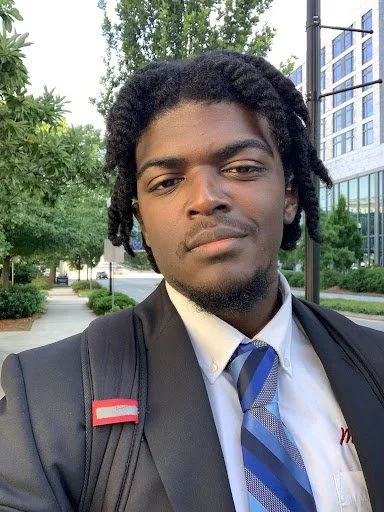
Harlem D. Henderson, a recent graduate of Morehouse College, is a graduate student at Washington DC’s Howard University. From a young age he has had a passion for self representation, empowering identity through visual art reflecting the tremendous power of diverse voices and experiences. With an interest in becoming the director of a historically African American museum, Harlem seeks to provide the histories of marginalized groups with a strong foundation and sounding board. By accepting the whole picture of American history, both concerning the arts and otherwise, Harlem believes true moral progress can be made by examining the past, so as to create a better present, and future.